Growing direct bookings at The Modernist Athens
Over the past four years, The Modernist Athens has undergone a powerful transformation in the way it generates revenue. One that doesn’t rely on chasing higher rates or adding more inventory, but on reshaping its distribution mix. At the heart of this shift is the steady growth of direct bookings.
Since 2022, the share of bookings coming directly to the hotel has increased every single year, reaching 51% in 2025. Crossing this threshold is more than a milestone; it represents a structural change in profitability. Every booking that moves from a commission-based channel to a direct one is revenue that stays with the hotel.
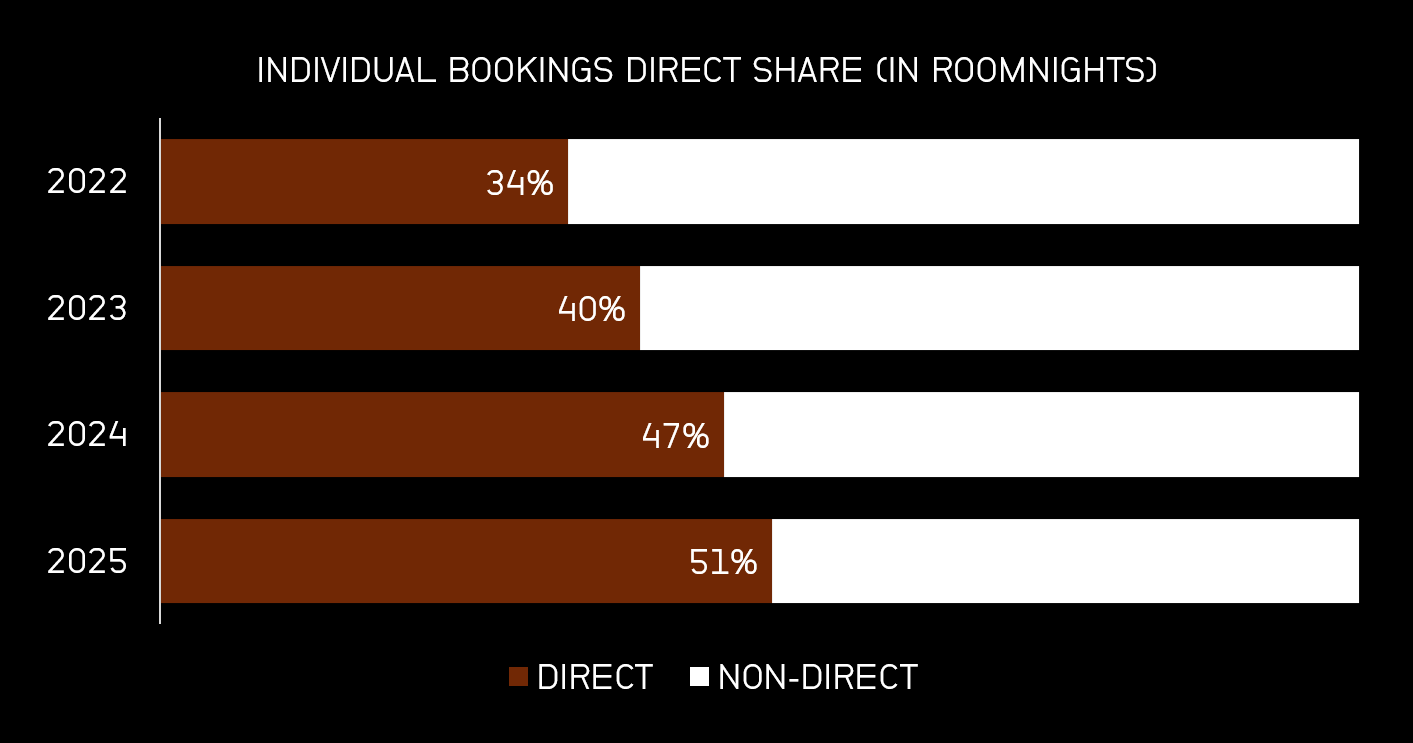
Direct bookings don’t just improve topline figures. They protect margins, reduce dependency on intermediaries, and give the hotel full control over pricing, guest data, and communication. Over time, this control compounds, turning distribution strategy into a core profit driver.
But the story doesn’t stop at direct. Equally important is how these bookings are made. Over the same period, The Modernist Athens has seen a consistent shift from offline direct reservations (phone and email) toward online direct bookings through its website. In 2025, 70% of all direct bookings are made online.
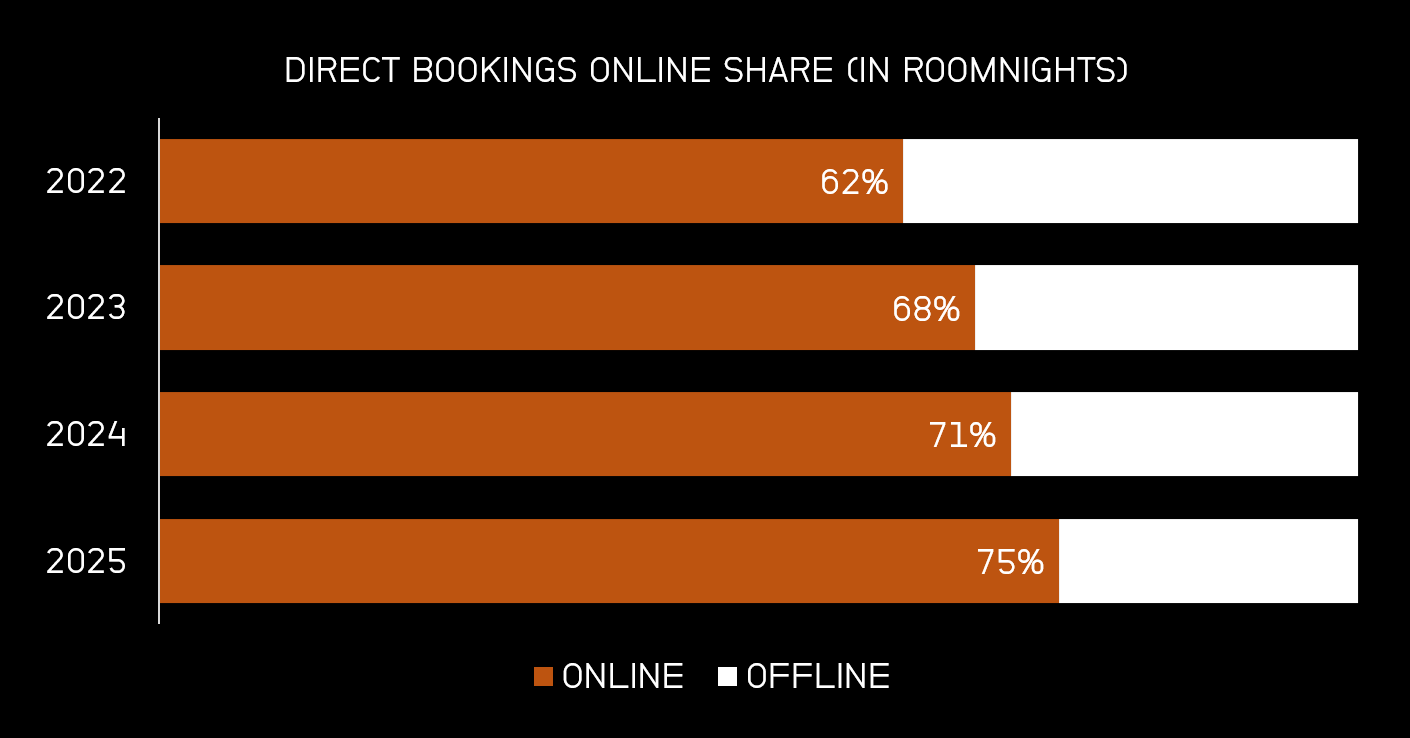
This distinction matters. Online direct bookings are significantly more efficient to manage. They don’t require staff time to handle enquiries, follow up on emails, or manually process reservations and payments.
The combined impact is substantial. Higher direct booking share means lower commission costs. Higher online booking share means lower operational costs. Together, they create a healthier, more resilient revenue model, one that grows without adding pressure to the team or the cost base.
At Outlier Hospitality, this is exactly where we focus. We don’t view direct bookings as a marketing KPI. We treat them as a commercial strategy, aligning pricing, channel mix and the booking journey to ensure revenue growth translates into real profit. The Modernist Athens is a clear example of what happens when distribution is managed with long-term intent.